Key facts: Commercial Water Damage
- Commercial restoration follows the same IICRC S500 water categories as residential work but often adds phasing, after-hours work and multiple parties.
- Tenants, owners, property managers and HOAs may each be responsible for different parts of a building, so responsibility is settled early.
- Moisture mapping and a drying log give owners, tenants and insurers a shared record of what was wet and when it was dry.
- Repairs to commercial buildings in unincorporated San Diego County may need permits from County Planning & Development Services.
- California requires contractors to be licensed by the Contractors State License Board for most construction and repair work.
In this page
- 1How commercial water damage differs from a house
- 2Signs a commercial space has a water problem
- 3Why water damage happens in commercial buildings
- 4How a contractor assesses a commercial loss
- 5Common commercial settings and what they usually involve
- 6How commercial restoration is done without stopping everything
- 7Typical division of responsibility in shared buildings
- 8What a manager or owner can do right away
- 9What to expect when a contractor arrives at a commercial site
- 10Commercial buildings in Rancho Santa Fe
- 11Reducing water damage risk in commercial buildings
- 12Deciding what to dry and what to replace in a business
- 13Issues that often come with commercial water damage
- 14Water damage in restaurants, cafes and club kitchens
- 15Water damage in barns, tack rooms and equestrian offices
- 16Records a business should collect during a water loss
- 17Water moving between attached units and common areas
- 18Commercial water damage questions in Rancho Santa Fe
What commercial restoration covers
How commercial water damage differs from a house
Commercial water damage restoration covers any building that is not a private home: retail shops, offices, restaurants, clinics, clubhouses, community buildings, schools, barns and equestrian facilities, and the shared parts of attached housing. The technical work is familiar: extraction, removal of materials that cannot be dried, cleaning and controlled drying. What changes is the setting around it.
In a commercial building, more people are affected and more people have a say. A tenant runs a business in the space, an owner holds the building, a property manager or association may manage common areas, and each may have its own insurer. Decisions that a homeowner makes alone, such as how much wall to open or when to start, may need agreement from several parties.
Time also matters differently. A home can live with a dehumidifier in the hallway for a week; a shop or restaurant may lose trade every day it is closed. Commercial jobs therefore lean on phasing, after-hours work and clear communication so that as much of the space as possible stays usable.
Finally, commercial buildings often have systems homes do not: fire sprinklers, commercial kitchens, server closets, accessible restrooms, larger HVAC and electrical gear. Water in or near those systems brings specialist trades into the job.
Signs
Signs a commercial space has a water problem
Stained ceiling tiles
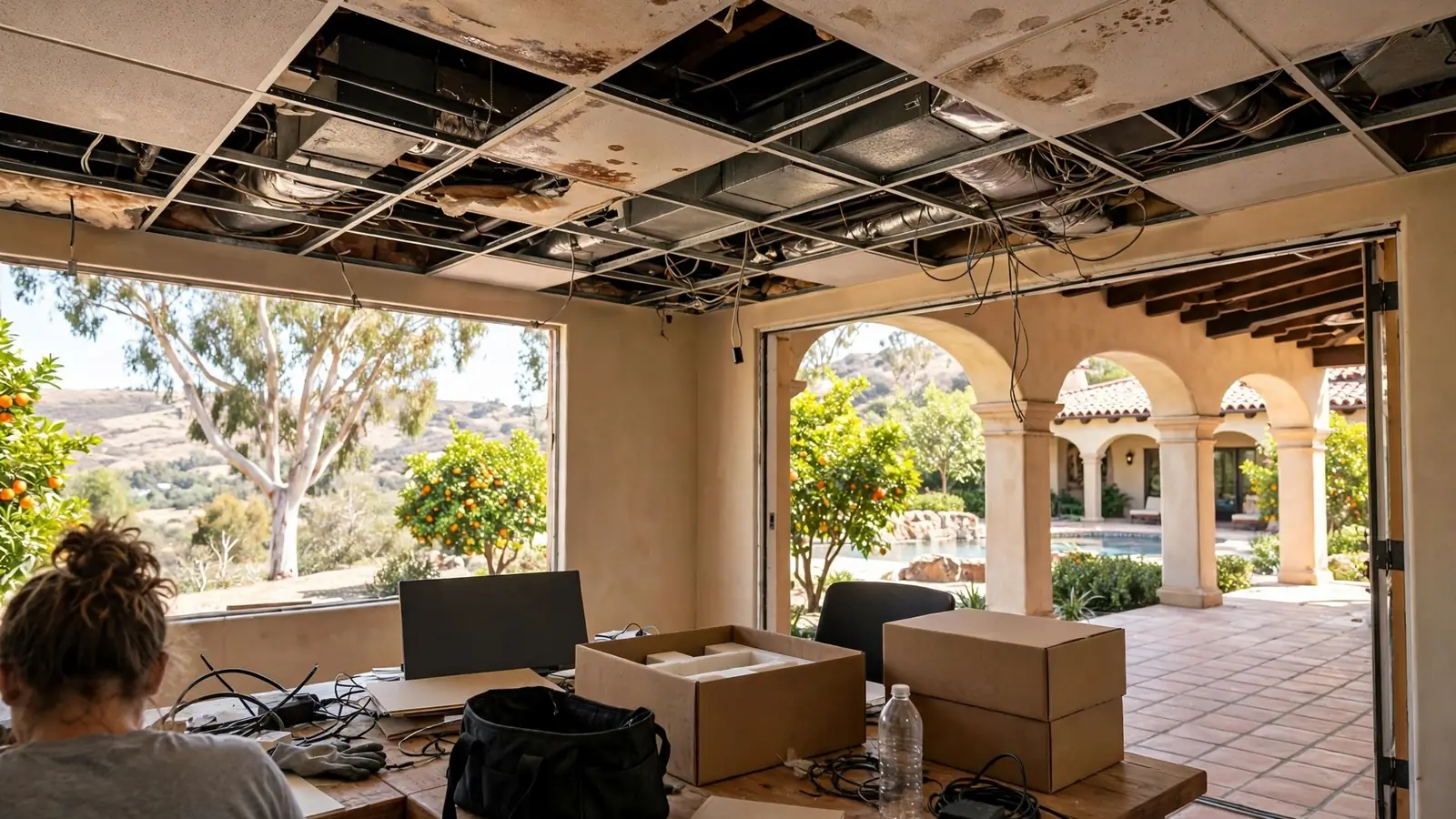
Brown rings or sagging tiles in a suspended ceiling usually mean a leak from a pipe, roof drain or HVAC unit above.
Carpet tiles that feel damp
Carpet tiles near walls or below windows that feel damp underfoot often hide water that has spread under several tiles.
Odor in a back room or closet
Storage rooms and closets with poor airflow show musty odors first when water has been sitting.
Fire sprinkler activation or drip
Even a single sprinkler head releases a lot of water. A slow drip from a sprinkler pipe also needs prompt attention.
HVAC condensate overflow
Rooftop or attic HVAC units can overflow condensate pans, leaving stains around supply registers.
Water at thresholds after rain
Water inside storefront doors after storms points to drainage or door seal problems at grade.
Common causes
Why water damage happens in commercial buildings
Many commercial water losses start above the ceiling. Supply lines, sprinkler pipes, HVAC condensate lines and roof drains all run through the space between a suspended ceiling and the structure above. A failure there can run for hours before it shows, especially at night or over a weekend when nobody is in the building.
Restrooms and kitchens are the next most common sources. Commercial restrooms see heavy use and their fittings wear faster than in homes. Restaurant kitchens have ice machines, dishwashers, prep sinks and floor drains, all of which can fail or back up.
Storms are a third source. Older storefronts, flat roofs and courtyards with limited drainage can let water in during heavy rain. In the Rancho Santa Fe village area, some buildings date back to the 1920s, and older roofs, parapets and masonry walls need regular attention.
Barns and equestrian facilities have their own patterns: wash racks, automatic waterers, irrigation and large roof areas. Offices and tack rooms inside barns can take on water that people do not notice until they open them after a storm.
Assessment
How a contractor assesses a commercial loss
- 1
Establish who is in charge
The contractor confirms who can authorize work: owner, tenant, property manager or association, and who should receive updates.
- 2
Stop the source
Supply valves are shut, the sprinkler contractor is called if a sprinkler line is involved, and roof or drain issues are temporarily protected.
- 3
Make the space safe
Electrical hazards, slip hazards and anything sagging overhead are addressed first, with customers and staff kept out of affected areas.
- 4
Map moisture across units
In shared buildings the contractor checks neighboring units and common areas, since water travels through shared walls and floors.
- 5
Plan around operations
Work is phased so unaffected parts of the business can keep operating, with noisy work scheduled out of hours where possible.
- 6
Document for all parties
Photos, moisture maps and a written scope are prepared so owners, tenants and insurers share the same record.
Building types
Common commercial settings and what they usually involve
| Property type | Frequent water sources | Special considerations |
|---|---|---|
| Village shops and galleries | Supply lines, roof leaks, restrooms | Inventory and artwork, older buildings, limited hours to work |
| Professional offices | Above-ceiling pipes, water heaters, kitchenettes | Files and electronics, server closets, after-hours work |
| Restaurants and cafes | Ice machines, dishwashers, floor drains | Food safety, health department rules, fast reopening |
| Clubhouses and locker rooms | Showers, laundry, pool equipment | Many fixtures, shared spaces, member schedules |
| HOA and community buildings | Restrooms, irrigation, roofs | Board approvals, shared responsibility, records |
| Barns and equestrian facilities | Waterers, wash racks, storm runoff | Animals, feed and tack storage, large roof areas |
| Attached condos and townhomes | Shared walls, stacked plumbing | Owner versus association responsibility |
The work
How commercial restoration is done without stopping everything
The first priority is to stop damage from spreading. Extraction and removal of soaked materials happen as soon as the space is safe, because the longer water sits, the more material is lost and the higher the chance of mold. The EPA's guidance on drying within 24 to 48 hours applies just as much to an office as to a home. [6]
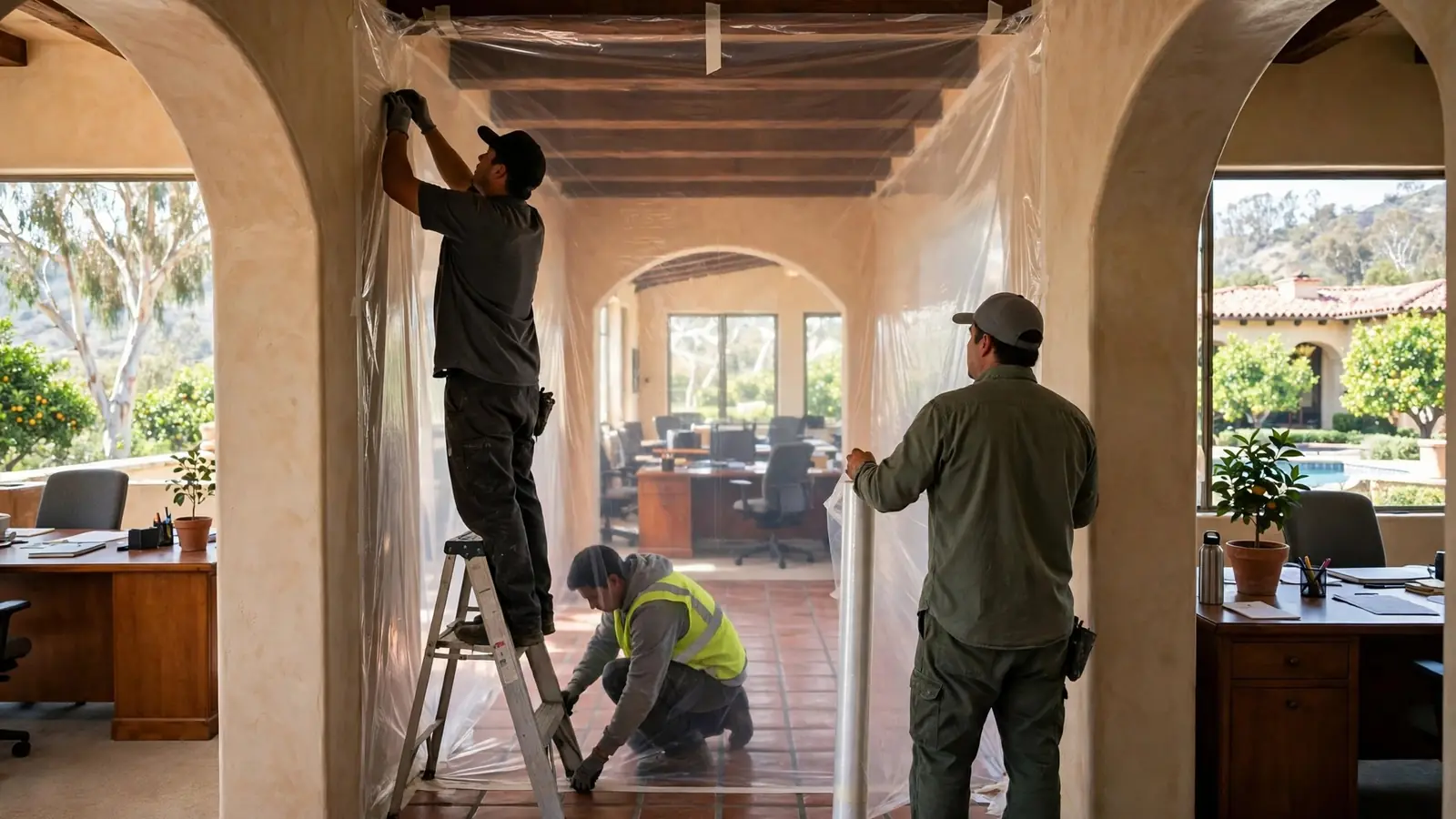
Next comes containment and phasing. Plastic barriers can isolate the work zone so the rest of the business stays open. Air scrubbers keep dust out of occupied areas. Noisy or dusty work, such as cutting drywall or lifting flooring, can be scheduled before or after business hours.
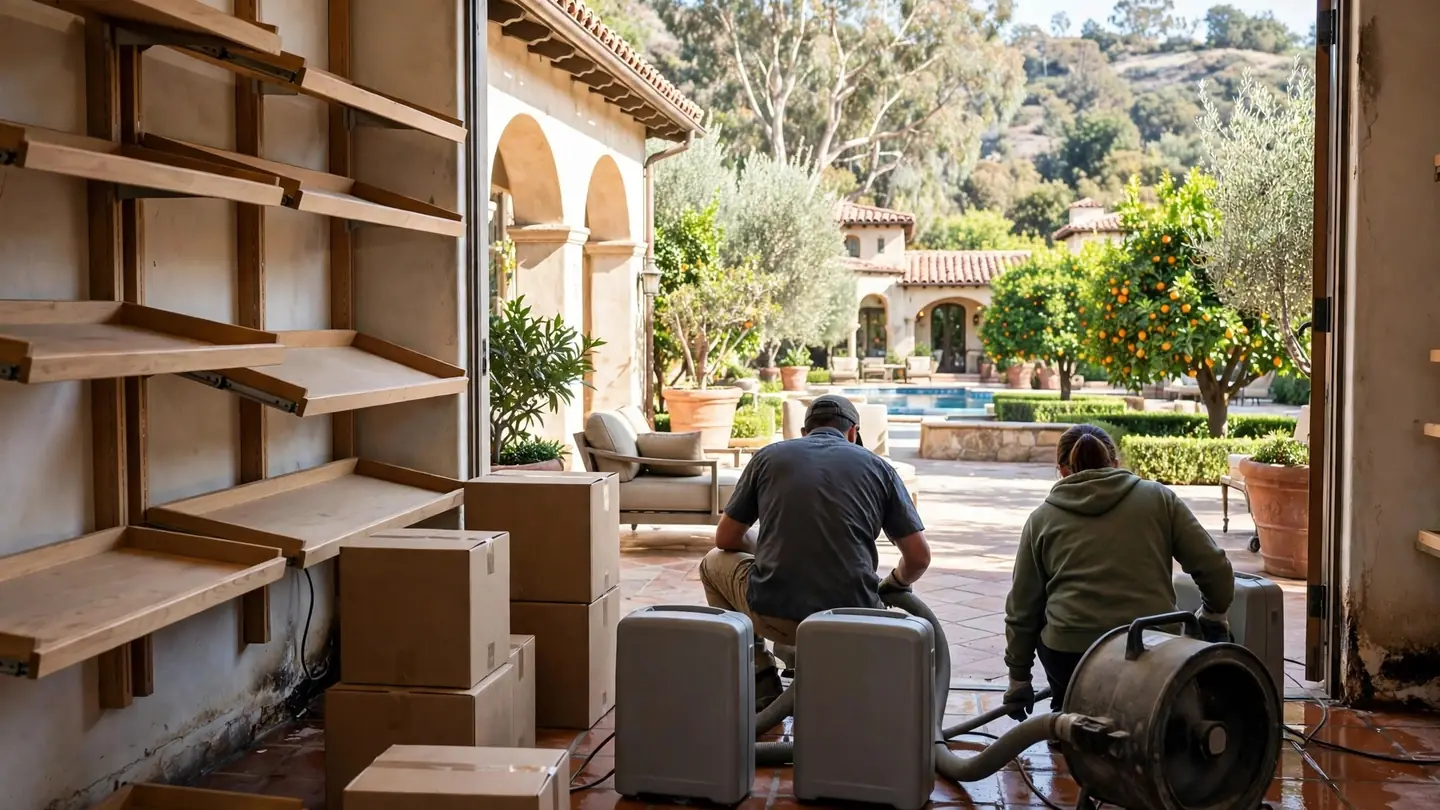
Drying follows the same principles as in a home, but at a larger scale. Commercial spaces may need more dehumidification capacity and more careful attention to building HVAC, which can either help or fight the drying setup. The contractor should coordinate with whoever manages the building systems.
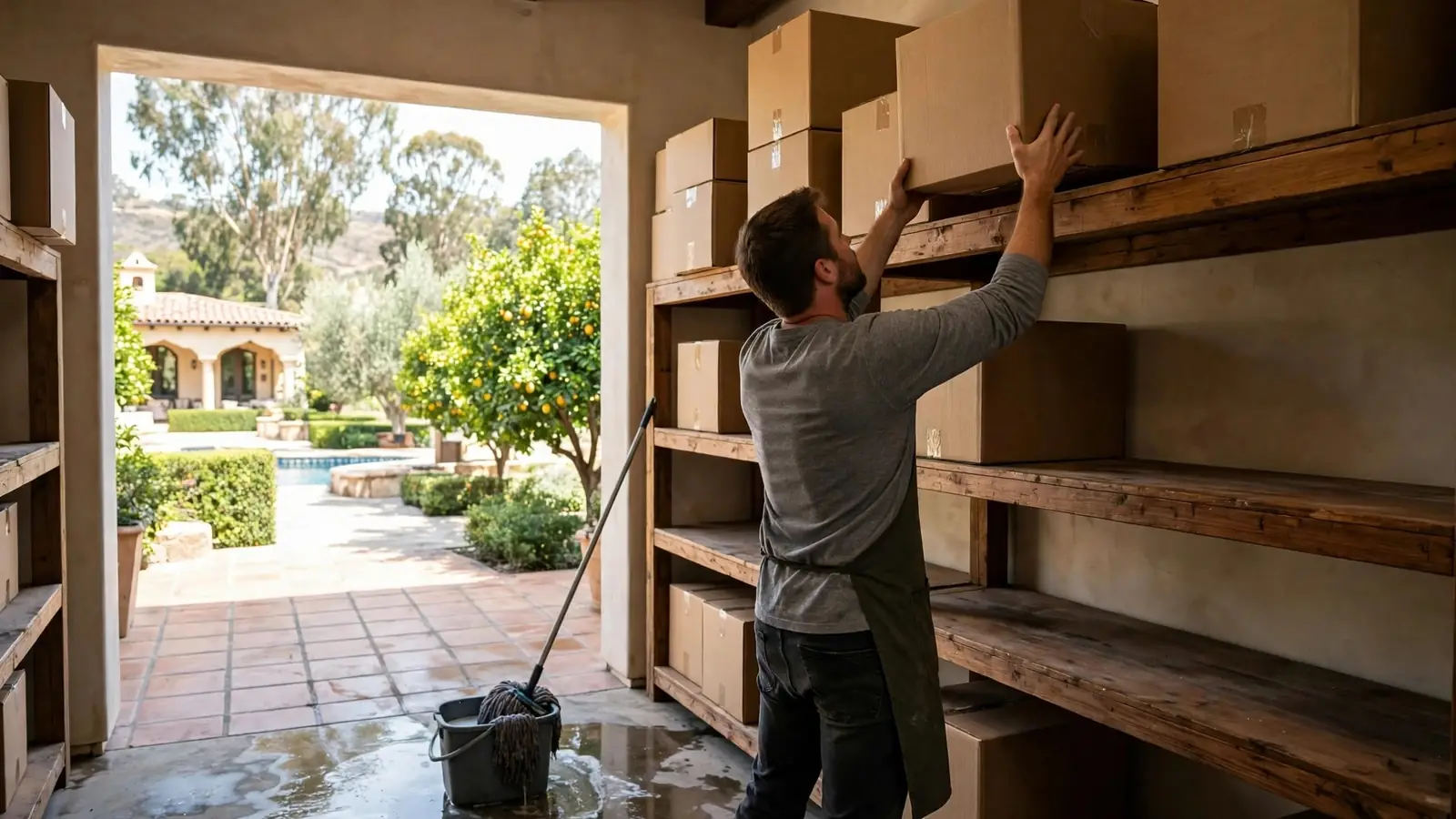
Contents are a big part of commercial work. Inventory, files, computers and fixtures may need to be moved, protected, cleaned or documented as lost. A contents list with photos is essential for insurance and for the business's own records.
First steps for managers
What a manager or owner can do right away
In the first hour, the most useful things a manager can do are stop the water, keep people safe and start the record.
Then make one call to get a restoration contractor on the way, and a second to the building owner, property manager or association so that everyone who needs to know is informed early.
- Shut off the water at the nearest valve or the building main
- Keep staff and customers away from wet floors and sagging ceilings
- Move inventory, files and electronics off the floor
- Photograph everything before it is moved
- Notify the owner, manager or association and your insurer
The visit
What to expect when a contractor arrives at a commercial site
The lead technician will want to meet the person who can authorize work and walk the space with them. Expect questions about business hours, any areas that must stay open, alarm and access arrangements, and who else needs to be informed.
Work often begins the same day with extraction and removal. Containment goes up so the rest of the space can be used. If the business needs to stay open, the crew may work early in the morning or after closing.
The contractor should give you a written scope covering what was found, what will be removed, how drying will be done and how long it is likely to take. They should also explain who will receive updates and how decisions will be made if more damage is found.
At the end of drying, ask for the moisture log and photographs. These help with the insurance claim, with any dispute between parties and with planning repairs.
Talk to a local contractor
Questions about commercial water damage?
One call connects you with an independent water damage restoration contractor who serves Rancho Santa Fe.
Rancho Santa Fe specifics
Commercial buildings in Rancho Santa Fe
Commercial property in Rancho Santa Fe is concentrated around the village center, where some buildings date to the community's early years and were designed by architect Lilian Rice in the Spanish Colonial Revival style. Older masonry, plaster and roofing in these buildings need careful handling. Exterior changes inside the Covenant may require review through the Rancho Santa Fe Association. [8]
Beyond the village, the community has clubhouses, golf and tennis facilities, equestrian centers, schools and association buildings. Many are within gated communities, which means arranging access in advance for crews and equipment.
Repairs that go beyond cleanup and drying may need building permits from San Diego County Planning & Development Services, since Rancho Santa Fe is unincorporated. [2] Contractors should hold a license from the California Contractors State License Board; owners and managers can check a license number online. [3]
Because the area is relatively small and close-knit, discretion often matters to businesses and associations. It is reasonable to ask a contractor how they handle signage on vehicles, staging in shared spaces and communication with members or customers.
Prevention
Reducing water damage risk in commercial buildings
A short maintenance routine and a plan for who does what can turn a major loss into a minor one.
- Inspect above-ceiling pipes and HVAC condensate pans during routine maintenance
- Install leak sensors in restrooms, kitchens, server closets and mechanical rooms
- Make sure staff know where water shutoffs are and how to use them
- Clear roof drains, scuppers and courtyard drains before the rainy season
- Keep an up-to-date contact list for owners, managers, contractors and insurers
- Store inventory and records off the floor in areas at risk of water
Dry or replace in commercial spaces
Deciding what to dry and what to replace in a business
Commercial finishes are often easier to replace than custom residential ones: carpet tiles, suspended ceiling tiles and standard drywall can be swapped quickly. That can make replacement the faster choice even when drying would work, because it shortens the time the space is out of use.
On the other hand, older buildings may have original materials worth keeping, such as plaster, wood floors and historic trim. Drying these in place takes longer but preserves the character of the building.
The right answer depends on the business's needs, the water category, the materials involved and what the owner and insurer agree. A good contractor lays out both options and the time each takes.
Related problems
Issues that often come with commercial water damage
Mold in closed spaces
Storage rooms, closets and above-ceiling spaces can grow mold if drying is slow.
Electrical and data damage
Water near panels, outlets and network equipment needs an electrician or IT specialist before use.
Sewage from restrooms
Restroom backups bring Category 3 cleanup requirements and may close areas to customers. [1]
Storm water at the storefront
Older entrances and courtyards may let water in repeatedly until drainage is improved.
Food service
Water damage in restaurants, cafes and club kitchens
Kitchens bring the most demanding rules to a water loss. Food that water touched, packaging that got wet and any surface used for food preparation all need attention under food safety rules, and the local environmental health office may need to be satisfied before service resumes. Commercial kitchens also have floor drains, grease interceptors, ice machines and dishwashers, any of which can be the source of the water in the first place.
Because kitchens close quickly and lose trade every day they stay closed, restoration in them is usually tightly phased. Extraction and cleaning can often be done overnight, with drying equipment placed to keep the line usable. Wet insulation behind stainless panels and moisture under quarry tile floors are the hidden problems worth asking about.
When a backup comes from a floor drain or grease line, it is treated as Category 3 contamination, and the kitchen is cleaned and disinfected before any food work restarts. Keep the restoration records with your food safety documentation.
Barns and equestrian facilities
Water damage in barns, tack rooms and equestrian offices
Equestrian properties are part of the character of Rancho Santa Fe, and their buildings take on water in ways houses do not. Automatic waterers and wash racks fail, large roofs shed a lot of water during storms, and barns are often set on lower parts of a property where runoff collects. Tack rooms, feed rooms and barn offices tend to be the spaces where water damage matters most.
Animals change the plan. Horses need to be moved or kept away from equipment, cords and contaminated water, and noise from air movers can unsettle them. A contractor working in a barn should talk with whoever manages the animals and agree on where equipment can go and when noisy work can happen.
Feed and bedding that got wet usually has to be discarded because it can mold. Leather tack can often be cleaned and dried slowly by someone who knows leather; fast drying with heat cracks it. Wood stall walls and barn framing can be dried, but expect it to take time in a large, open building.
Paperwork
Records a business should collect during a water loss
- 1
Time-stamped photos
Photograph the source, every affected room, damaged stock and equipment before anything is moved or thrown away.
- 2
Moisture map and drying log
Ask the contractor for the readings taken at the start, at each visit and at completion.
- 3
Contents and inventory list
List damaged inventory, fixtures and equipment with quantities and photos, and keep damaged items until your insurer agrees they can go.
- 4
Trade reports
Keep written findings from the plumber, roofer, sprinkler or electrical contractor about the cause and the fix.
- 5
Communication record
Note who you spoke with at the landlord, association and insurer, and what was agreed, with dates.
Attached homes and associations
Water moving between attached units and common areas
Attached condos and townhomes behave like small commercial buildings when water gets loose. Plumbing is often stacked, so a leak in an upper unit runs down through shared walls and ceilings into the unit below. A slab leak under one home can show up as wet flooring next door. Responsibility is shared between owners and the association according to the CC&Rs, and each owner usually has a separate policy alongside the association's master policy.
In these situations the contractor's first job is to map moisture across every affected unit and common area, not just the one where the call came from, and to share that map with each party. Clear early documentation avoids a common problem: one unit dried and closed up while water is still trapped in the shared wall it borders.
FAQ
Commercial water damage questions in Rancho Santa Fe
Can work be done after hours?
Often, yes. Many contractors phase work so noisy or dusty tasks happen before or after business hours. Ask about this on your call.
Who is responsible when water comes from another unit?
It depends on the cause, the lease and the policies involved. Insurers often sort out responsibility between themselves. Document everything and notify all parties early.
How long will my business be affected?
That depends on the size of the loss and the materials. Containment and phasing can keep part of a business open while drying runs.
Do I need a separate contractor for the sprinkler system?
Yes. Fire sprinkler repairs require a licensed fire protection contractor. The restoration contractor handles the water damage.
Can someone be reached outside business hours?
Yes. Business owners and managers can call at any hour; many commercial leaks are found first thing in the morning or after a weekend.
What records should I keep?
Photos, the moisture log, the scope of work, a contents list and any reports from plumbers or other trades.
Is the contractor licensed?
Ask for their California Contractors State License Board number and check it online before work begins.
Does an HOA have to approve work?
For common areas or exterior changes, usually yes. For interior work in a unit, check your CC&Rs and talk to the association.
Sources and citations
- [1]IICRC S500 Standard for Water Damage Restoration
- [2]San Diego County Planning & Development Services
- [3]California Contractors State License Board
- [4]California Department of Insurance
- [5]OSHA: Flood cleanup hazards
- [6]U.S. EPA: Mold cleanup in your home
- [7]U.S. EPA: Indoor air quality
- [8]Rancho Santa Fe Association
- [9]U.S. EPA: Protect your family from asbestos