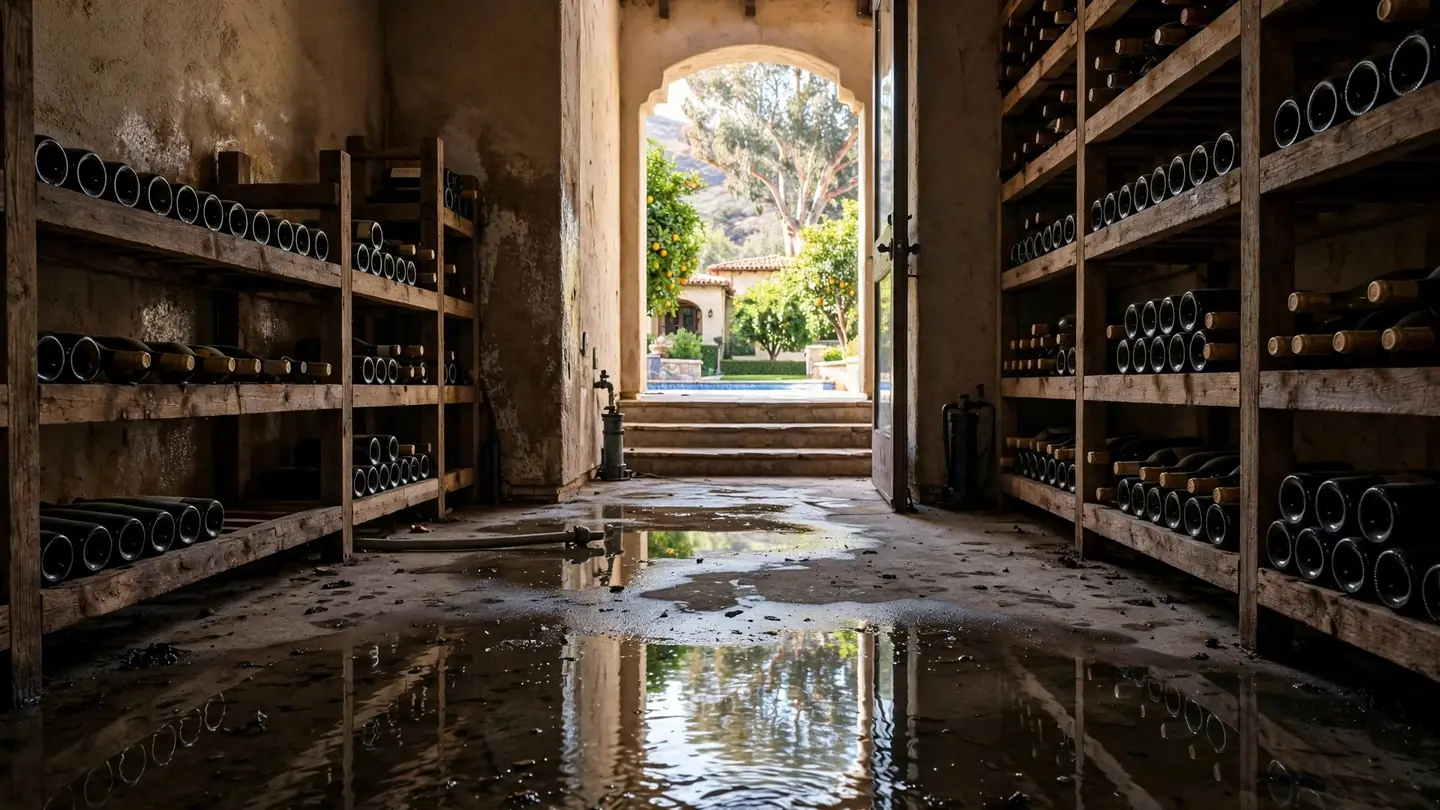
Key facts: Basement and Lower-Level Flooding
- Below-grade rooms rely on waterproofing, perimeter drains and sometimes sump pumps to stay dry.
- Saturated soil during long storms puts hydrostatic pressure on below-grade walls and floors.
- Water coming through walls or floors from outside is generally treated as contaminated.
- A battery backup on a sump pump protects against power cuts during storms.
In this guide
- 1How water reaches a room below grade
- 2Early signs of water getting into a lower level
- 3Responding to water in a lower level
- 4Common causes and longer-term fixes
- 5How a flooded lower level is cleaned and dried
- 6Lower levels on hillside lots in Rancho Santa Fe
- 7Protecting a wine collection when the cellar takes on water
- 8Keeping a lower level dry through the rainy season
- 9Lower-level gyms, theaters and living space
- 10Why the cause matters for a lower-level claim
- 11Clearing the musty smell from a lower level
- 12Lower-level flooding questions
Why lower levels flood
How water reaches a room below grade
Below-grade walls are designed to hold back soil, and they depend on waterproofing on the outside and drainage around the footing to keep water away. When soil stays wet for days, water builds pressure against the wall. Any gap in the waterproofing, a crack in the wall or a blocked perimeter drain lets it through.
Other routes are more sudden. A sump pump can fail or lose power during a storm. A light well or exterior stair can fill with runoff and overflow through a door. Inside, a cooling unit's condensate line, a water heater or a bathroom fixture can leak, and water naturally collects on the lowest floor.
Signs
Early signs of water getting into a lower level
Damp line at the base of a wall
A dark band along the bottom of a wall after rain shows water pushing in at the footing.
White powder on concrete
Efflorescence, a white mineral deposit, shows water moving through concrete or masonry.
Musty smell in the cellar
A change in how the cellar smells often comes before visible water.
Peeling paint or lifting flooring
Moisture under paint or flooring pushes it away from the surface.
What to do
Responding to water in a lower level
- 1
Stay safe
Do not walk into standing water near electrical equipment. Turn off power to the lower level at a dry panel.
- 2
Find the source
Check whether water is coming in from outside, from a pump, or from a fixture or appliance.
- 3
Move what you can
Lift bottles, equipment and stored items to a dry floor. Photograph wine labels and collections first.
- 4
Call for help
A restoration contractor can extract and dry; a plumber or drainage contractor may be needed for the cause.
Causes and fixes
Common causes and longer-term fixes
| Cause | Typical sign | Long-term fix |
|---|---|---|
| Failed waterproofing | Damp walls after long rain | Exterior waterproofing repair |
| Blocked perimeter drain | Water at the base of walls | Drain cleaning or replacement |
| Sump pump failure | Sudden water during a storm | Pump service, alarm, battery backup |
| Light well or stair flooding | Water at a door or window | Drain cleaning, covers, regrading |
| Interior leak | Water with no rain | Plumbing repair |
Cleanup
How a flooded lower level is cleaned and dried
Water from outside is generally treated as contaminated, so carpet, pad and drywall it touched are usually removed. Hard surfaces are cleaned and treated before drying starts. Below-grade rooms are often cool and enclosed, so drying may take longer and may need desiccant dehumidifiers.
Cellar racking, millwork and insulation need individual decisions. Racking can usually be dried slowly; insulation behind sealed walls often has to come out. Before the room is restored, the cause should be fixed. Otherwise the next storm brings the same problem back.
Rancho Santa Fe notes
Lower levels on hillside lots in Rancho Santa Fe
Many estates are built into slopes, which puts one side of a lower level against soil and the other open to a terrace. Runoff from above and from hardscape tends to collect on the uphill side. Keeping area drains clear and checking that downspouts discharge well away from the house matters more here than on flat lots.
Waterproofing repairs and drainage changes may require permits from San Diego County Planning & Development Services. [6] A drainage or waterproofing specialist can advise what is needed.
Call about this problem
Questions about basement and lower-level flooding?
One call connects you with an independent water damage restoration contractor who serves Rancho Santa Fe.
Collections
Protecting a wine collection when the cellar takes on water
Wine in sealed bottles is more robust than people expect. Glass and corks tolerate a short spell of water on the floor; the real risks are lost labels, which matter for identification and value to collectors, and changes in temperature if the cooling system is affected. Photographing the racks and labels before anything is moved creates a record you can rely on later.
If bottles need to come out while the room is dried, move them in their rack order to a cool, dark and stable part of the house, and keep them on their sides. Wet wooden cases and cardboard boxes should be emptied and set aside, since they can grow mold. Ask the contractor how long the cooling unit will be off and when the room will be back to cellar conditions.
Prevention
Keeping a lower level dry through the rainy season
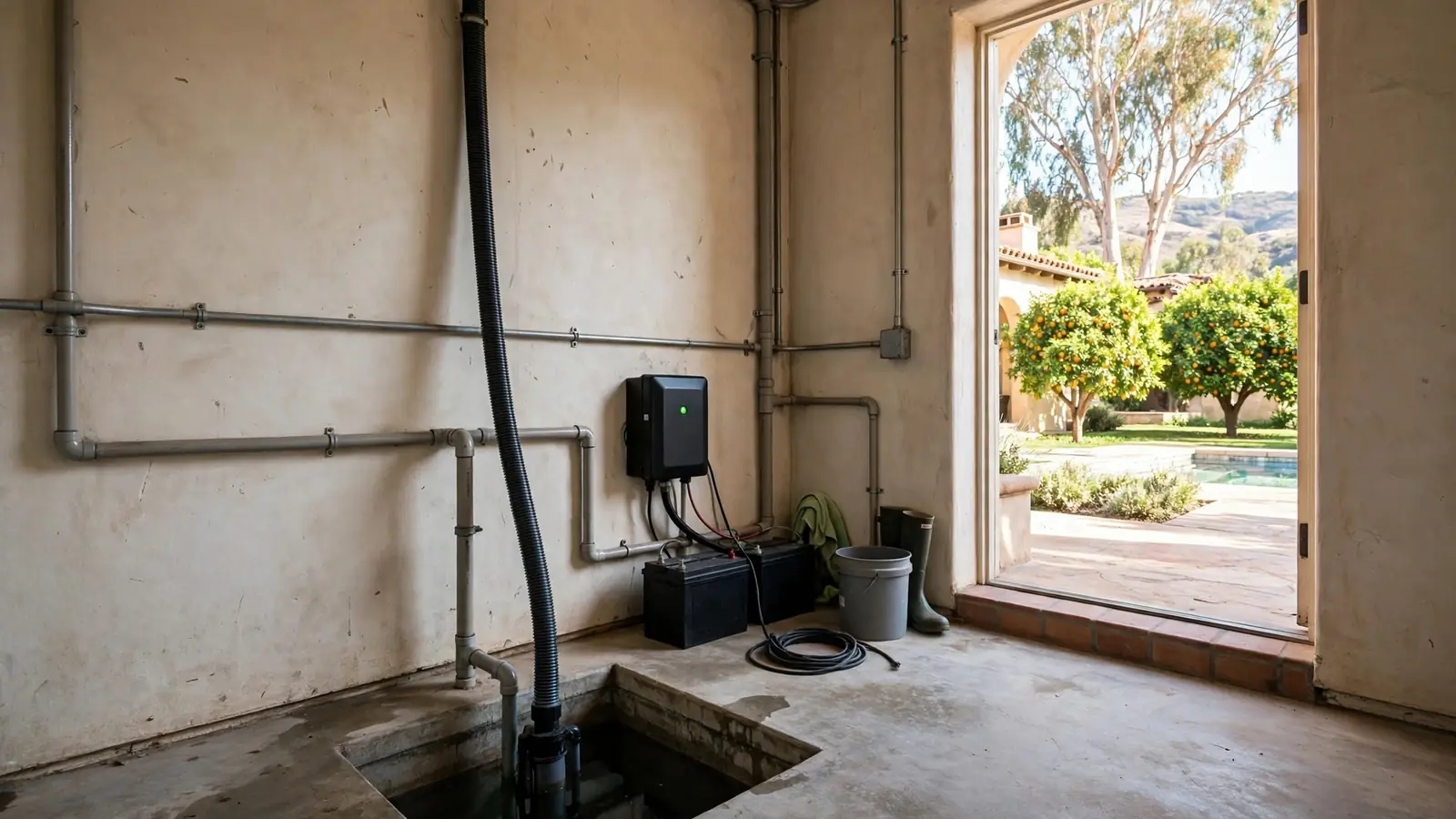
- Test the sump pump each fall by filling the pit with water and watching it cycle
- Fit a battery backup and a high-water alarm that sends an alert to your phone
- Clear light wells, exterior stair drains and area drains before the first storm
- Check that downspouts and surface drains carry water well away from the lower walls
- Keep stored items on shelves rather than on the floor of a below-grade room
- Watch for efflorescence or damp lines after rain and have them checked early
Gyms and media rooms
Lower-level gyms, theaters and living space
Finished lower levels often hold equipment that does not like water: home theater electronics, gym machines with motors, and acoustic wall panels that soak water like a sponge. Unplug equipment at a dry outlet before water reaches it, and do not switch it back on until a technician has checked it. Acoustic panels, wall fabric and carpet in these rooms usually have to be removed if water from outside reached them.
Insurance note
Why the cause matters for a lower-level claim
Insurers often treat water from outside very differently from water from a pipe or appliance. Photograph where water came in, keep any report from the drainage or waterproofing contractor, and note the weather on the day. These details help everyone understand the claim from the start.
Odor afterward
Clearing the musty smell from a lower level
Below-grade rooms hold odors because they are enclosed and cool. Once wet materials are removed and the space is dry, a lingering musty smell usually means something damp was missed: carpet tack strip, the back of a cabinet, or insulation behind a wall. Running a dehumidifier long term can help keep a lower level in a healthy humidity range after the event, and a simple hygrometer tells you whether it is working.
FAQ
Lower-level flooding questions
Is basement flooding covered by insurance?
It depends on the cause and your policy. Water from a burst pipe is treated differently from groundwater or surface flooding. Check your policy.
Can my wine be saved?
Usually. Bottles survive water well; labels may not. Photograph labels before moving bottles and keep them cool.
Should I install a sump pump?
A drainage or waterproofing professional can advise. If you already have one, a battery backup and an alarm are sensible.
Is someone available during a storm at night?
Yes. Calls to this line are answered around the clock.