
Key facts: Cielo
- Cielo is a gated community in the hills of Rancho Santa Fe, ZIP 92067, known for view lots and large estates.
- Hilltop homes are more exposed to wind-driven rain, which can enter at window and door systems that stay dry in calmer storms.
- Graded pads and slopes depend on drainage swales, area drains and retaining walls to move storm water away from homes.
- Burned slopes shed more water and debris in storms; the National Weather Service issues flash flood and debris flow alerts after fires.
- Runoff that reaches a Cielo home from the slopes counts as Category 3 water under the IICRC S500 standard.
In this page
- 1Cielo ZIP code covered
- 2Living on the high ground
- 3Features of Cielo homes that change how water damage happens
- 4Where water damage usually begins in Cielo
- 5What a contractor should check in a Cielo home
- 6Cielo water damage clues and likely causes
- 7How restoration usually works in a Cielo home
- 8Getting to a Cielo home
- 9Wind, rain and dry seasons on the ridges
- 10Practical steps for Cielo homeowners
- 11Restoration services Cielo homeowners ask about
- 12Large glass openings and water entry
- 13Upper decks and balconies over finished rooms
- 14How the time of year shapes a Cielo water job
- 15Pools and infinity edges near slopes
- 16A typical first week after a Cielo water loss
- 17Guest houses and casitas on large Cielo lots
- 18Questions Cielo homeowners find useful
- 19Pressure regulators and booster pumps in hilltop homes
- 20Moisture behind stucco and stone cladding
- 21Outdoor kitchens, fountains and covered terraces
- 22Water damage after firefighting or a nearby wildfire
- 23Residential fire sprinklers in newer hillside homes
- 24Shared facilities and common grounds in Cielo
- 25A fall checklist for hilltop homes
- 26Cielo water damage questions
Covered area
Cielo ZIP code covered
Cielo homes carry the Rancho Santa Fe 92067 ZIP code, covered by the contractor network this line connects to.
- Rancho Santa Fe ZIP 92067
About Cielo
Living on the high ground
Cielo occupies hilltops and ridges in the eastern part of Rancho Santa Fe. It is a gated community built mostly from the early 2000s, with large estates set on graded pads to make the most of long views. The community has its own club facilities, and its homes range from Mediterranean and Spanish styles to contemporary designs with a lot of glass.
The setting is the story for water damage. Homes on hilltops face weather head-on, and lots carved out of slopes depend on engineered drainage to keep water moving past them. The surrounding hills are open and vegetated, which brings the wildfire-edge conditions common to the eastern side of coastal North County.
Inside, Cielo homes share the traits of other large custom homes in the area: many bathrooms, several water heaters, wine rooms, outdoor kitchens and pools, and finishes chosen for the long term.
Construction
Features of Cielo homes that change how water damage happens
Large window walls and sliders
Big glass openings facing the view take the brunt of wind-driven rain and depend on sill pans and seals.
Graded pads and slopes
Homes sit on flattened pads with slopes above and below, relying on swales and drains to divert runoff.
Exposed roof edges and decks
Upper decks over living space and exposed roof edges are common leak points in windy storms.
Long supply and irrigation lines
Big lots mean long underground runs to the house, guest quarters, pools and landscape.
Pools and infinity edges
View-side pools and their equipment add water lines and drainage near slopes.
Stucco and stone exteriors
Exterior walls rely on a drainage plane behind the finish to shed water that gets past it.
How leaks start here
Where water damage usually begins in Cielo
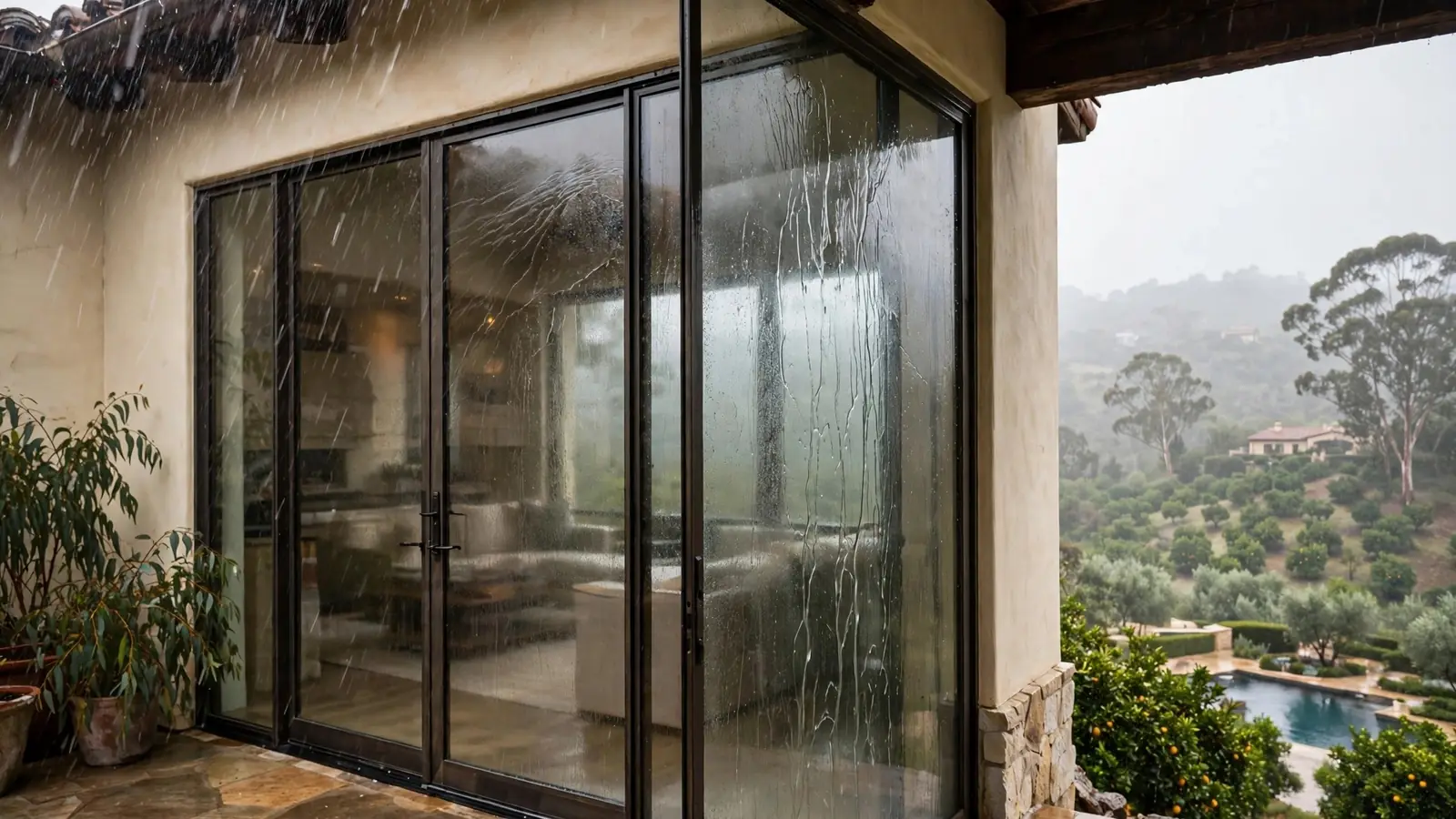
Wind-driven rain is the signature hilltop problem. In a calm storm, a well-built window wall stays dry. In a storm with strong onshore wind, water is pushed up and sideways, testing sill pans, weep systems, door thresholds and the joints around them. Leaks that appear only in certain storms, and only on one side of the house, usually come from this.
Decks over living space are another common source. A deck with a membrane that has aged or been damaged, or a drain that clogs, can leak into the room below. Stains on the ceiling under a deck after rain are a typical sign.
Inside, the usual plumbing and appliance failures apply. And on large lots, long underground lines to pools, guest houses and irrigation can break, sending water across a slope or toward a foundation.
Assessment
What a contractor should check in a Cielo home
- 1
Ask about the weather when the leak appeared
Leaks that appear only in windy storms point to openings and decks rather than plumbing.
- 2
Check the exposed side first
The side of the house facing the prevailing storm wind is the first place to look.
- 3
Look under decks
Ceilings below upper decks and balconies are checked for staining and moisture.
- 4
Trace slope drainage
If water came in at grade, the swales, area drains and retaining walls above are examined.
- 5
Map moisture behind finishes
Stucco, stone and plaster can hide moisture; meters and thermal imaging help find it.
- 6
Document for repair
Photos and notes on the opening or deck that leaked help the window, roofing or waterproofing contractor.
What you might see
Cielo water damage clues and likely causes
| Sign | Likely cause | First step |
|---|---|---|
| Water at a slider threshold in windy rain | Sill pan or threshold failure | Protect floor; note wind direction |
| Stain on ceiling below a deck | Deck membrane or drain failure | Clear deck drain; dry ceiling |
| Wet wall base on the uphill side | Swale or area drain blockage | Clear drains; check slope |
| Stucco staining below a window | Window flashing or weep failure | Moisture survey behind stucco |
| Soggy ground near the pool in dry weather | Pool or irrigation line leak | Shut off zone; leak detection |
| Mud at doors after a storm | Runoff from slopes above | Treat as outside water; check drainage |
Restoration approach
How restoration usually works in a Cielo home
When wind-driven rain has entered, the interior work is often modest compared with the exterior fix. Flooring near the opening, the wall below the window and any drapery or furniture nearby are dried or cleaned. The opening itself needs a window or waterproofing specialist, because the next storm will test it again.
Leaks under decks usually mean drying a ceiling cavity, sometimes opening the ceiling to remove wet insulation. The deck membrane or drain must be repaired before the ceiling is closed.
If runoff from slopes reached the house, the water is Category 3, and porous materials it touched are removed. [2] Drainage fixes outside should be planned alongside interior restoration.
For plumbing leaks inside, restoration follows the usual path: extraction, careful removal where needed, and measured drying of stone, wood and plaster.
Access
Getting to a Cielo home
Cielo is gated, so contractors need to be expected. Let the gate know a restoration crew is coming or give the contractor what the gate needs.
Roads wind up the hills, and some drives are steep. Mention on your call where a truck can park and which part of the house is affected.
- Alert the gate in advance
- Describe parking and drive access
- Say which side of the house is affected
- Mention any slope or wall concerns

Seasonal factors
Wind, rain and dry seasons on the ridges
Rain falls mostly between late fall and early spring. Hilltop homes feel the wind in winter storms more than valley homes do, which is when window, door and deck leaks show up.
In the dry season, irrigation and pool use peak and landscape lines are most likely to break. Late summer and fall bring Santa Ana conditions: dry, gusty winds that raise fire risk. The Rancho Santa Fe Fire Protection District publishes wildfire preparedness information for residents. [3]
Prevention
Practical steps for Cielo homeowners
- Have window and door sill pans, weeps and thresholds checked on the windward side
- Inspect deck membranes and clear deck drains before the rainy season
- Clean swales, area drains and retaining wall weep holes every fall
- Fit leak sensors and an automatic shutoff for plumbing inside the house
- Walk the property for wet spots that could mean an underground leak
- Keep fire-wise defensible space around the house, which also reduces debris in drains
Services
Restoration services Cielo homeowners ask about
Water damage cleanup
Leaks at windows, doors and decks, and plumbing failures inside.
Flood cleanup
Runoff and mud from slopes above, handled as contaminated water.
Mitigation and drying
Drying ceilings under decks, walls behind stucco and stone floors.
Sewage cleanup
Backups on long drain runs in large homes and guest quarters.
Windows and doors
Large glass openings and water entry
Large openings are what make hilltop homes special, and they need care. Lift-and-slide doors, folding walls and big fixed windows depend on sill pans, gaskets and drainage channels that must stay clear. Dirt, leaves and insects can block weep holes, and gaskets age in the sun.
If water came in at an opening, photograph the leak, note the wind direction and rain intensity, and share it with the contractor and with the window or door installer. Repeat leaks are easier to diagnose with a record of when they happen.
Decks over living space
Upper decks and balconies over finished rooms
Decks over living space are common in Cielo homes, where outdoor living and views go together. They are protected by waterproof membranes under the tile or stone surface, with drains that carry water away. When the membrane is damaged, often around posts, railings or drain fittings, water reaches the structure below.
Ceiling stains below a deck after rain are the usual sign. Drying the ceiling is the restoration contractor's job; repairing the deck needs a waterproofing specialist.
Talk to a local contractor
Questions about cielo?
One call connects you with an independent water damage restoration contractor who serves Rancho Santa Fe.
Seasonal timing
How the time of year shapes a Cielo water job
| Season | Common sources | What to expect |
|---|---|---|
| Winter storms | Wind-driven rain at windows and decks | Exterior repair needed alongside drying |
| Wet spells | Slope runoff, drain blockages | Possible Category 3 water at grade |
| Summer | Irrigation, pool lines, AC condensate | Good drying conditions |
| Fall | Santa Ana winds, debris in drains | Clean drains before first rain |
Pools on the view side
Pools and infinity edges near slopes
View-side pools often sit near the edge of a pad with a slope below. Leaks from pool shells, plumbing or equipment can saturate the slope or the ground near the house. A pool that loses water faster than evaporation would explain, or soggy ground below the pool, should be checked by a pool leak specialist.
If water from a pool or its equipment reaches the house, the contractor will dry it like any other leak. Pool water with chemicals is generally treated as Category 2.
Week one
A typical first week after a Cielo water loss
- 1
Day one
Water stopped or diverted, extraction done, opening or deck temporarily protected, drying started.
- 2
Day two
Removal of soaked materials; ceilings under decks opened if needed.
- 3
Days three to five
Monitoring visits; window, deck or drainage specialist scheduled.
- 4
Days five to eight
Interior drying finished; equipment removed.
- 5
After drying
Exterior fix completed before interior repairs are finished.
Guest quarters
Guest houses and casitas on large Cielo lots
Many Cielo estates include guest houses or casitas. These are used less often, so leaks there can go unnoticed. When water is found, ask whether it may have been there for a while, since that changes the scope.
Leak sensors and regular walk-throughs in guest quarters are simple, effective protection.
On your call
Questions Cielo homeowners find useful
- How do you trace leaks that only appear in windy storms?
- Do you work with window, door and deck waterproofing specialists?
- How do you dry a ceiling under a deck?
- How do you handle runoff water from slopes?
- Will you share moisture maps and photos?
- What is your California contractor license number?
Water pressure on the hills
Pressure regulators and booster pumps in hilltop homes
Water pressure depends on elevation and on where a home sits in the supply zone. The Olivenhain Municipal Water District serves much of this part of Rancho Santa Fe, and homes at different heights within a community can see quite different incoming pressure. [5] Some homes need pressure regulators to bring pressure down; others rely on booster pumps or storage to keep it up for fire sprinklers and large fixtures.
Both setups have failure points. A regulator that fails open lets high pressure reach every fitting, which strains supply lines and can cause sudden bursts. A booster pump system adds its own tanks, valves and electrical controls. If you notice banging pipes, dripping relief valves or pressure that suddenly changes, have a plumber check the system before it causes a leak.
Stucco and stone walls
Moisture behind stucco and stone cladding
Most Cielo homes are clad in stucco, stone veneer or both. These finishes are not waterproof on their own. They rely on a drainage plane, usually building paper or a membrane with a weep screed at the base, to carry away water that gets past the surface. Where that plane is interrupted, around windows, at roof-to-wall joints or where decks meet walls, water can reach the framing.
Moisture behind cladding is hidden from both sides. Staining below windows, efflorescence on stone, bubbling interior paint and musty smells in exterior rooms are clues. A moisture survey with meters and thermal imaging can find wet areas before they become rot or mold problems, and an exterior specialist can then open and repair the affected section.
Outdoor kitchens and loggias
Outdoor kitchens, fountains and covered terraces
Outdoor living on the view side often includes kitchens with sinks, ice makers and refrigerators, fountains, fire features and covered loggias attached to the house. Each water feature has buried supply and drain lines, and a leak can soak a terrace slab and the wall it adjoins. Covered loggias also have roof-to-wall joints that can leak in windy storms.
If an interior wall next to an outdoor kitchen or loggia shows damp at the base, ask the contractor to check the outdoor lines and drains as well as the interior plumbing.
After a fire nearby
Water damage after firefighting or a nearby wildfire
Homes on the wildland edge can be affected by fire without burning. Firefighting water, sprinkler activation and ash-laden runoff in the first storms after a fire can all bring water damage, often mixed with soot and ash. Water from firefighting or carrying ash is treated as contaminated, and the cleanup includes removing residue as well as drying.
If your home was near a fire, check gutters, roof valleys and drains for ash and debris before the rain arrives. The Rancho Santa Fe Fire Protection District shares preparedness and recovery information for residents.
Fire sprinklers
Residential fire sprinklers in newer hillside homes
Many newer homes in fire-prone areas have residential fire sprinkler systems. They save lives and property in a fire, but like any piping they can leak or be damaged, and an accidental activation releases water quickly. Sprinkler lines often run through attics and ceilings, so a leak usually shows up as a ceiling stain or drip.
If a sprinkler head is damaged or activates, close the system's control valve if you know where it is and it is safe to do so, and call a fire protection contractor to restore the system. The restoration contractor handles the water damage. Do not leave the system off longer than necessary; it protects the house.
Before the rainy season
A fall checklist for hilltop homes
- 1
Clear every drain
Deck drains, area drains, swales and weep holes are cleared of leaves, ash and debris.
- 2
Check openings on the windward side
Sill pans, weeps and thresholds on the storm-facing side are cleaned and inspected.
- 3
Walk the slopes
Look for erosion, new cracks in walls and wet areas that could mean a buried leak.
- 4
Test leak sensors and shutoffs
Make sure alerts reach someone who can respond when you are away.
FAQ
Cielo water damage questions
Why does my window only leak in some storms?
Wind-driven rain pushes water into openings that stay dry in calm rain. Note the wind direction and share it with the contractor and installer.
Is runoff water from the slope dangerous?
It is treated as contaminated (Category 3) because it carries soil, debris and possibly chemicals.
Who repairs a leaking deck?
A waterproofing contractor repairs the deck; the restoration contractor dries and repairs the damage below.
Can someone come during a storm at night?
Yes. Storms often hit hilltop homes at night, and calls from Cielo are answered at any hour by an independent contractor.
Do I need permits for repairs?
Window, deck and drainage repairs on a hillside lot often involve County permits; your builder or waterproofing contractor can confirm which.
What should I do after a nearby wildfire?
Follow official alerts, keep drains clear and be ready for more runoff and debris in the next storms.
How do I know if my pool is leaking?
Watch for water loss beyond normal evaporation and wet ground near the pool. A pool leak specialist can test.
Why are my pipes banging?
Banging often points to high pressure or water hammer. A plumber can check the pressure regulator or booster system before it causes a leak.
Can moisture behind stucco be found without opening the wall?
Often, yes. Meters and thermal imaging can locate suspect areas first, so only the necessary sections are opened.
My smart leak sensor went off but I see nothing. What now?
Shut off the water to that area, then check under and behind the fixture. Small leaks can soak cabinets and subfloors before showing. A moisture check settles it.
Does the association handle water from common slopes?
Usually, if the source is on common ground. Photograph where water enters and report it promptly.
Should I caulk the window myself?
Temporary sealing can help, but a lasting fix usually needs the installer or a waterproofing specialist.
Sources and citations
- [1]National Weather Service San Diego
- [2]IICRC S500 Standard for Water Damage Restoration
- [3]Rancho Santa Fe Fire Protection District
- [4]San Diego County Planning & Development Services
- [5]Olivenhain Municipal Water District
- [6]U.S. EPA: Mold cleanup in your home
- [7]Ready.gov: Floods
- [8]California Contractors State License Board
- [9]California Department of Insurance